Every recommendation here follows the Trail Gear Journal testing and evaluation process.
The Short Version
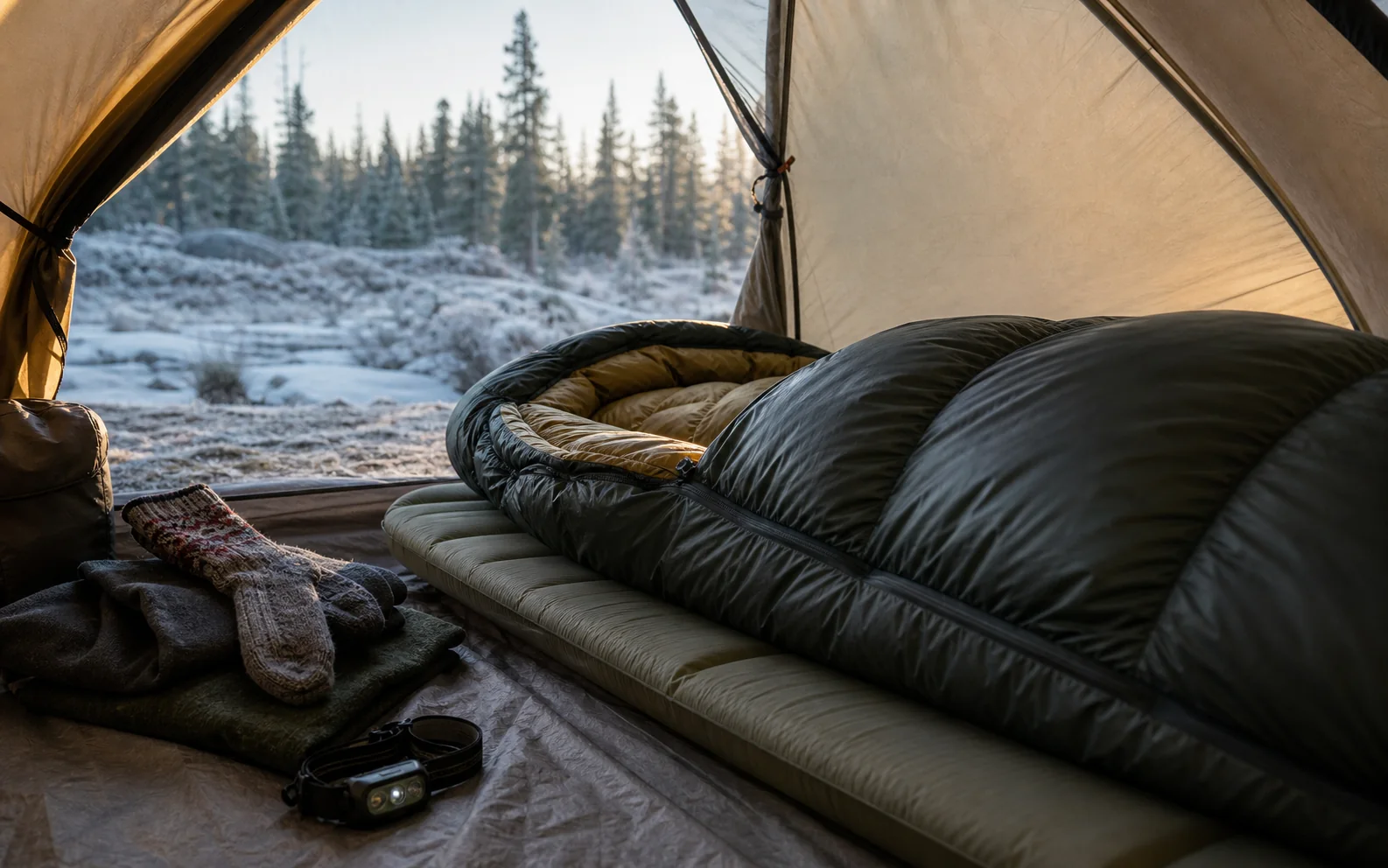
Cold-weather sleeping bags are easy to overbuy and even easier to misunderstand. The number in a product name is not always the temperature at which an average person sleeps comfortably. It may be a lower-limit rating, a marketing label, or a simplified version of more detailed lab testing. For US campers who sleep in the Rockies, Appalachians, desert shoulder seasons, or northern state parks, a bag in the 15 to 20 degree range is often the practical starting point, but the pad and sleep clothing matter just as much.
Comfort Ratings vs Survival Ratings
A sleeping bag temperature number should be read with caution. A lower-limit rating can mean a warm sleeper may make it through the night in a curled position, not that every camper will feel cozy. Women, side sleepers, tired hikers, and people who naturally run cold often need more insulation. If overnight lows are expected around freezing, many campers are more comfortable with a bag rated below freezing and a sleeping pad with meaningful R-value. The safer buying move is to plan around comfort, not bragging rights.
Best Shape for Cold Camping
Mummy bags are more thermally efficient because they reduce empty air space. Semi-rectangular bags are roomier and easier for side sleepers, but they usually require more insulation to feel equally warm. Quilts can work well for experienced backpackers, yet many car campers prefer the simplicity of a full sleeping bag with a hood. If your trips involve family camping, overlanding, or truck-bed platforms, comfort may matter more than shaving ounces. If your trips involve hiking miles into camp, packed size and weight move higher on the list.
Down vs Synthetic
Down insulation wins when packability, long-term loft, and warmth-to-weight are priorities. It also costs more and needs care around moisture. Synthetic insulation is bulkier for the same warmth, but it can be a smart choice for damp regions, kids, loaner gear, and budget-minded campers. The best answer depends on how you actually travel. A down bag that stays dry in a waterproof stuff sack is excellent for backpacking. A synthetic bag that gets tossed into the back of an SUV by tired campers can be a very practical car-camping tool.
Pad Pairing
A cold-weather bag is only half the sleep system. When insulation under your body compresses, the pad becomes the thermal barrier. In cold conditions, look for a pad with an R-value suitable for shoulder-season or winter use. Foam pads can be layered under inflatable pads for extra warmth and puncture backup. Car campers can use thicker self-inflating pads, while backpackers need to balance warmth with weight. If you have ever woken up cold from below while the top of the bag felt fine, the pad was probably the weak link.
Fit and Draft Control
Fit matters because extra space must be warmed by your body. A bag that is too tight can compress insulation and feel restrictive; a bag that is too roomy can feel drafty. Look for a hood that cinches comfortably, a draft collar or tube along the zipper, and a zipper that can vent without opening the whole bag. Side sleepers should pay attention to shoulder and knee room. Cold weather punishes small annoyances because you notice every gap at 3 a.m.
Care and Storage
Never store a sleeping bag compressed for long periods. Use the large storage sack or hang it in a dry closet. Air it after trips, spot clean when possible, and wash only according to manufacturer instructions. Down bags need careful drying with low heat and patience so the clusters fully re-loft. Synthetic bags are more forgiving but still last longer with gentle handling. A bag that keeps its loft is warmer, and loft is the whole game.
Bottom Line
For cold-weather camping, buy a sleep system rather than a number. Match the bag to realistic overnight lows, pair it with a warm pad, keep moisture out, and choose a shape that lets you actually sleep. A slightly heavier setup that gives you eight good hours is usually better than a minimalist setup that looks impressive in a spreadsheet and feels miserable before dawn.
Source Notes
- Temperature ratings vary by standard, brand, and sleeper physiology; this article treats them as planning tools rather than guarantees.
- Pad insulation, dry base layers, and campsite selection can change real warmth more than a small rating difference.
FAQ
Is a 20 degree sleeping bag warm enough for freezing weather?
Often, but not always. Many sleepers need a 10 to 15 degree comfort buffer, especially if they sleep cold or use an underinsulated pad.
Is down or synthetic better for cold camping?
Down packs smaller and can be very warm for its weight. Synthetic insulation handles damp conditions better and usually costs less.
Does the sleeping pad matter as much as the bag?
Yes. A warm bag on a low-R-value pad can still feel cold because the ground steals heat through compression.