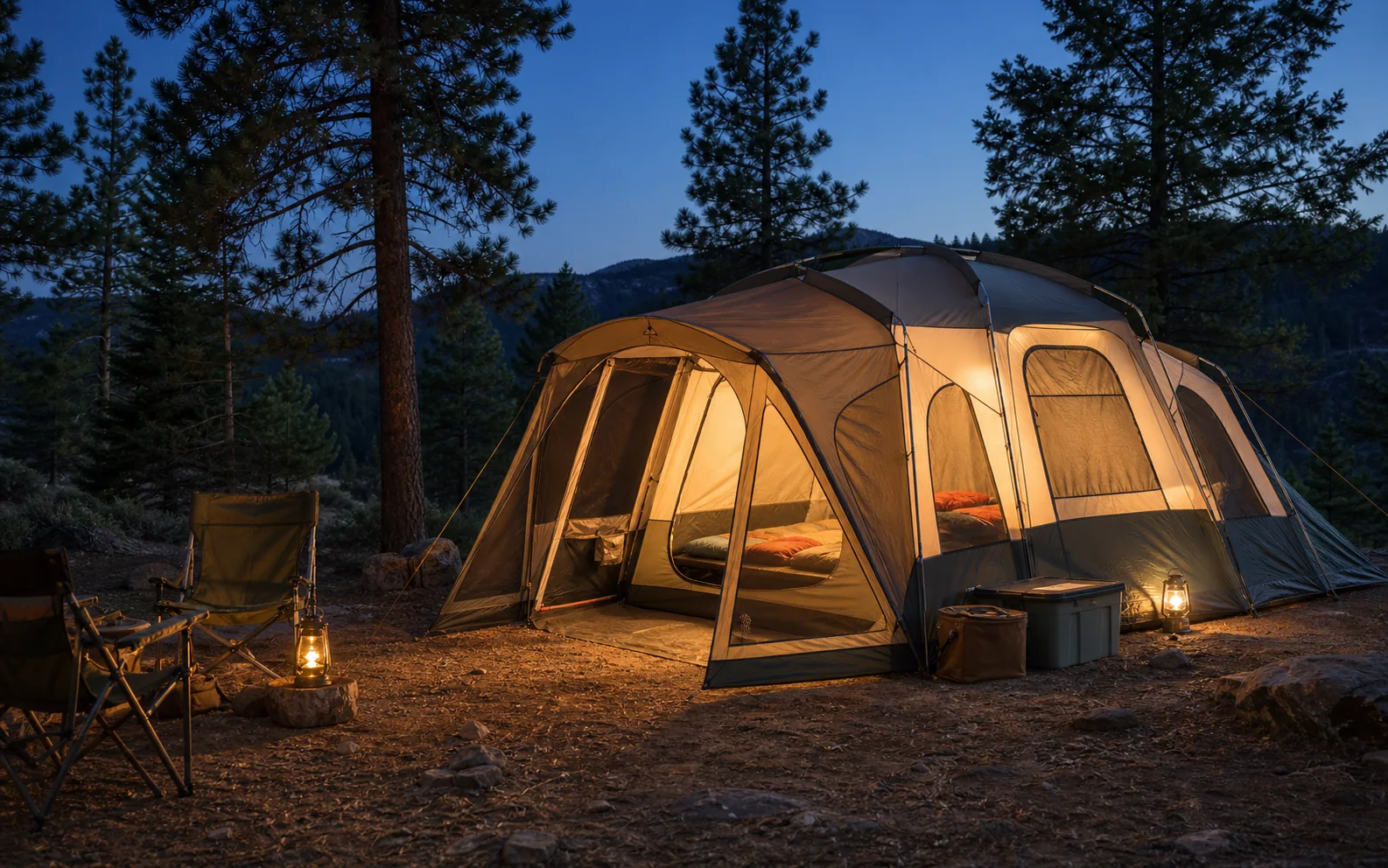
What This Calculator Does
Estimate tent capacity and floor space before you buy or pack, with room for people, pads, and indoor gear. It is built for quick planning before you buy gear, load a vehicle, pack a backpack, or leave for a campground where small mistakes can become expensive or uncomfortable. The result should be treated as a range-aware starting point, then checked against your actual gear, local rules, weather, and group needs.
How This Calculator Works
people × floor-space range per person, then rounded up to a practical tent capacity. Minimal sleeping uses about 15-20 square feet per person, while roomy camping with gear often lands closer to 25-30 square feet per person.
This calculator treats manufacturer tent capacity as a tight sleeping layout, not a comfort promise. A four-person tent usually means four pads placed close together with little extra room for duffels, shoes, or a dog.
For a no-frills setup, the calculator starts near 15-20 square feet per person. If you keep gear inside or choose a roomier comfort setting, it moves toward 25-30 square feet per person and recommends stepping up one nominal tent size.
The output is a planning estimate. Actual comfort depends on pad width, tent wall shape, vestibules, peak height, doors, and how much gear can live outside the sleeping area.
Planning Factors
| Factor | Planning Range | Why It Matters |
|---|---|---|
| Minimal sleeping | 15-20 sq ft per person | Works for narrow pads and very little indoor gear. |
| Roomy car camping | 25-30 sq ft per person | Better for families, duffels, and shoulder-season layers. |
| Manufacturer capacity | Tight by design | Often assumes sleepers are shoulder to shoulder. |
| Vestibule storage | Reduces indoor clutter | Useful in rain, dust, and crowded campsites. |
Field Tips
- Choose one capacity size larger than your group for normal car camping comfort.
- Prioritize vestibules if wet shoes, backpacks, or camp chairs need sheltered storage.
- Check floor dimensions, not only the marketing capacity printed in the product name.
- Tall cabin tents feel roomy but can be less graceful in wind than lower dome-style tents.
Common Mistakes
- Buying by capacity number alone and ignoring the floor dimensions.
- Forgetting that wide sleeping pads can change the real layout.
- Counting a vestibule as sleeping space instead of gear storage.
- Choosing a very tall tent for exposed windy campsites without checking guy-out options.
When to Recalculate
Run the numbers again whenever the trip changes in a meaningful way: one more person joins, the forecast gets hotter or colder, the campground rules change, a resupply point becomes uncertain, or you swap a major piece of gear. Outdoor planning is rarely a one-and-done decision. A quick recalculation before packing can catch mismatches that are easy to miss when you are focused on reservations, food, driving time, and weather windows.
For the cleanest estimate, use the calculator once during early planning and again after your gear is staged. The first pass helps with shopping and route decisions. The second pass catches real-world details: extra layers, water containers, fuel, bulky pads, damp-weather backups, and group items that were not obvious at the start.
Related Planning Guides
Use this tool alongside the broader Trail Gear Journal planning library. Good estimates work best when paired with gear judgment, campsite organization, and current trip conditions.
- Camping Calculators
- Best Camping Tents for Families in 2026
- How to Set Up a Campsite Without Forgetting Key Gear
- Camping Water Calculator
FAQ
What size tent do I need for two people?
Most pairs are comfortable in a three-person tent for car camping, especially if they keep duffels or a dog inside. A two-person tent is usually a tight sleeping-first choice.
Is a four-person tent really good for four adults?
Usually only if everyone accepts a tight layout with limited indoor storage. For comfort, many groups of four prefer a six-person tent.
How much tent floor space should I plan per person?
Use roughly 15-20 square feet per person for minimal sleeping and closer to 25-30 square feet per person when comfort and indoor gear matter.
Should I size up for kids?
Often yes. Kids still need pads, bags, clothes, shoes, and room to move, and family trips usually involve more indoor gear than solo trips.
Does peak height matter as much as floor space?
It matters for livability. A tent with modest floor area but vertical walls can feel roomier than a larger low-profile shelter.